Paved Access That Supports Daily Traffic
Concrete Driveway Installation in Rock Hill for properties with failing asphalt, unpaved access routes, or driveways showing structural failure
Cracked asphalt sheds chunks into the yard, gravel driveways develop ruts that trap water and damage vehicle suspensions, or existing concrete slabs have settled unevenly creating trip hazards and drainage reversals. New driveway installation involves excavating unstable material, placing compacted aggregate base, installing reinforcement such as rebar or wire mesh, and pouring concrete in uniform thickness that distributes vehicle loads without cracking. Heritage Excavation & Concrete LLC replaces driveways that have reached the end of serviceable life, installs decorative concrete options including stamped patterns that replicate stone or brick, and finishes surfaces using techniques that balance traction with smooth appearance for both residential and commercial projects.
Driveway replacement requires removing existing pavement to subgrade, addressing soil conditions that contributed to previous failure, and redesigning drainage if the original installation lacked proper slope. Reinforced concrete pouring places steel within the slab thickness to control crack width and location, while smooth finishing work uses bull floats and trowels to achieve surfaces free of low spots where water would pond.
Request a detailed estimate based on driveway length, width, and subgrade conditions observed during site inspection.
What You Notice Once Concrete Cures and Hardens
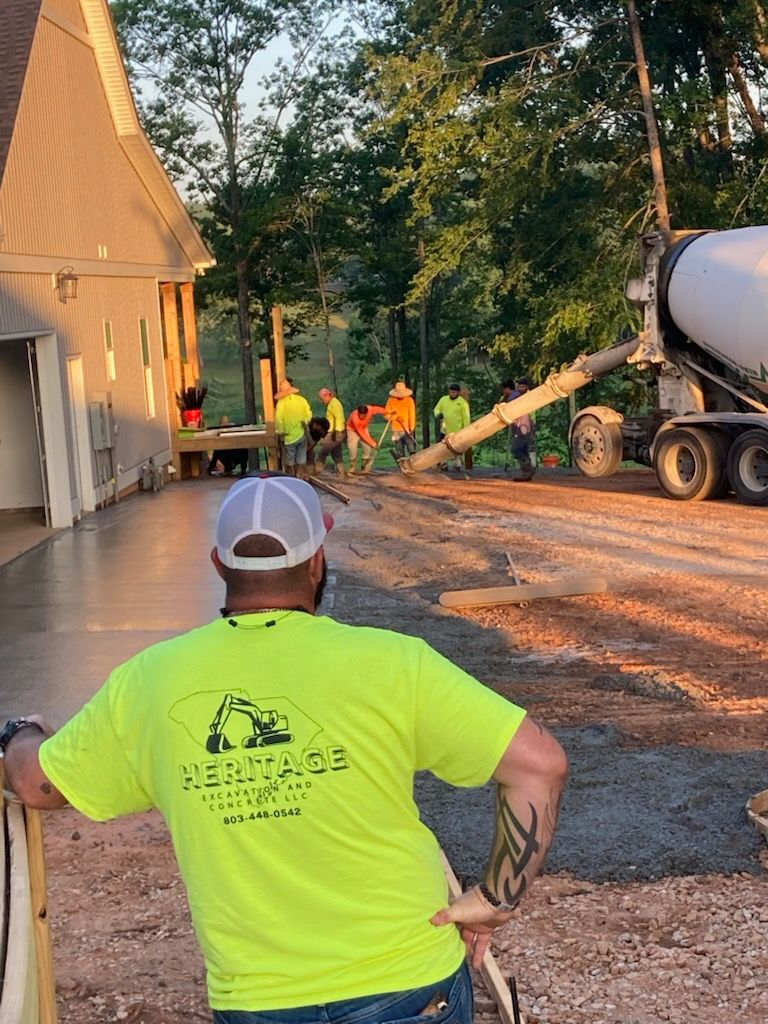
Pad preparation beneath driveways compacts base material in lifts, verifies uniform support across the entire slab footprint, and ensures edges have adequate thickness to resist cracking where the slab transitions to soil. Stamped concrete involves pressing patterns into freshly poured material before final set, creating textures and joint lines that mimic higher-cost materials while maintaining the durability and low maintenance of standard concrete. South Carolina freeze-thaw cycles are mild compared to northern climates, but proper finishing and curing remain critical since rapid moisture loss during hot weather causes surface cracking that propagates over time.
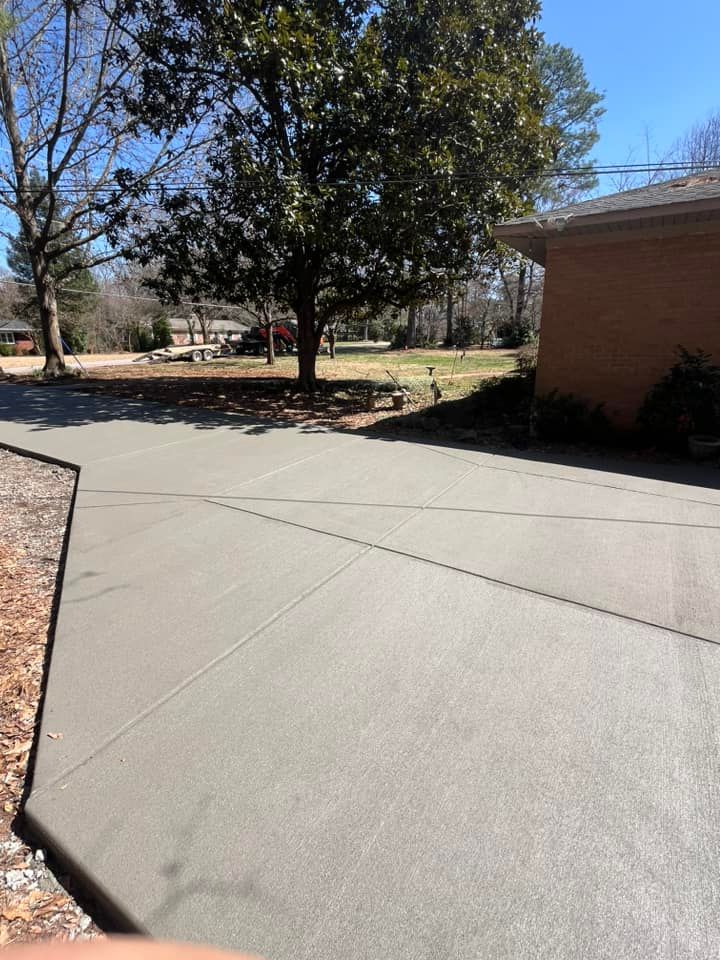
Once installation completes and concrete reaches strength, vehicles traverse the driveway without sinking into soft spots or bouncing over heaved sections, rainwater sheets across the surface toward drainage edges rather than pooling in settled areas, and the slab resists cracking from normal traffic loads for decades when subgrade and reinforcement were properly executed. Decorative patterns remain visible without fading since stamped texture is integral to the slab rather than applied as a surface coating, and expansion joints placed at planned intervals allow seasonal movement without random fractures splitting the pavement.
Residential driveways typically use four-inch thickness for passenger vehicle loads, while commercial projects specify thicker sections and higher concrete strength to accommodate delivery trucks and sustained heavy traffic. Smooth finishing provides clean appearance but can become slippery when wet, so broom finishes or exposed aggregate surfaces add texture that improves traction without compromising drainage performance, a consideration particularly relevant for sloped driveways common in areas with variable topography.
Common Questions About This Service
Driveway installation questions often focus on how long concrete must cure before use, what causes premature cracking, and how decorative options affect long-term durability.
How long after pouring can vehicles drive on a new concrete driveway?
Concrete reaches sufficient strength for light vehicle traffic within seven days under normal conditions, though full cure requiring 28 days provides maximum durability and crack resistance, with heavy vehicles or early loading risking surface damage and structural compromise.
What causes new concrete driveways to crack shortly after installation?
Inadequate subgrade compaction, insufficient reinforcement, poor drainage causing washout beneath slabs, or improper curing that allows rapid moisture loss all contribute to early cracking, with control joints placed intentionally to manage crack location rather than prevent cracking entirely.
How does stamped concrete hold up compared to standard finish in Rock Hill?
Stamped surfaces perform identically to smooth concrete in terms of structural durability since both use the same mix design and thickness, with pattern longevity depending on sealer application that protects color and texture from weathering and chemical exposure.
What base material supports concrete driveways?
Compacted crushed stone or gravel provides stable foundation that drains water away from the slab bottom, preventing voids from erosion or frost action, with base thickness ranging from four to eight inches depending on soil bearing capacity and expected traffic loads.
How are drainage and slope managed during driveway installation?
Driveways slope away from garages and toward street gutters or yard drainage paths at minimum two percent grade, with cross-slope added on wide driveways to prevent water running down the center line where vehicles track moisture into garages.
Heritage Excavation & Concrete LLC coordinates excavation, base preparation, and concrete placement so driveways cure without settlement or cracking from rushed installation schedules. Schedule a consultation to review decorative options and reinforcement details for your property's specific access requirements.