Damaged Concrete Replaced or Restored
Concrete Repair & Removal in Rock Hill for cracked driveways, uneven sidewalks, and failing concrete surfaces
Concrete cracks from several mechanisms: shrinkage during curing, freeze-thaw damage in saturated sections, tree root pressure lifting slabs, or settlement where base material washes out or compacts unevenly. You need repair when cracks widen beyond hairline size, when surfaces develop height differences creating trip hazards, or when scaling and spalling expose aggregate and reinforcement to accelerated deterioration. Heritage Excavation & Concrete LLC evaluates whether damaged concrete in Rock Hill requires partial repair, resurfacing, or complete removal and replacement based on the extent of deterioration and the cause of failure. Repairing surface cracks without addressing underlying settlement or drainage problems produces results that fail again within months.
Removal work uses jackhammers or concrete saws to section damaged areas into manageable pieces for hauling, followed by base inspection and correction of any conditions that contributed to the original failure. Replacement pours match existing concrete in thickness and strength, with isolation joints separating new sections from old to prevent stress transfer during curing. Resurfacing applies a thin bonded overlay where the underlying concrete remains structurally sound but surface deterioration affects appearance or creates minor unevenness.
Arrange an on-site inspection to determine whether your concrete requires repair, resurfacing, or full replacement based on current condition and failure patterns.
What You Notice Once Concrete Work Is Finished
Repair methods depend on crack width, slab movement, and whether active forces continue stressing the concrete. Narrow dormant cracks receive routed grooves filled with flexible sealant that accommodates minor movement without reopening, while wide cracks in settling slabs require mudjacking or base stabilization before surface repair provides lasting results. Trip hazards at sidewalk joints are corrected by grinding down the raised section when height difference remains small, or by removing and repoucing the settled section when grinding would remove too much concrete thickness.
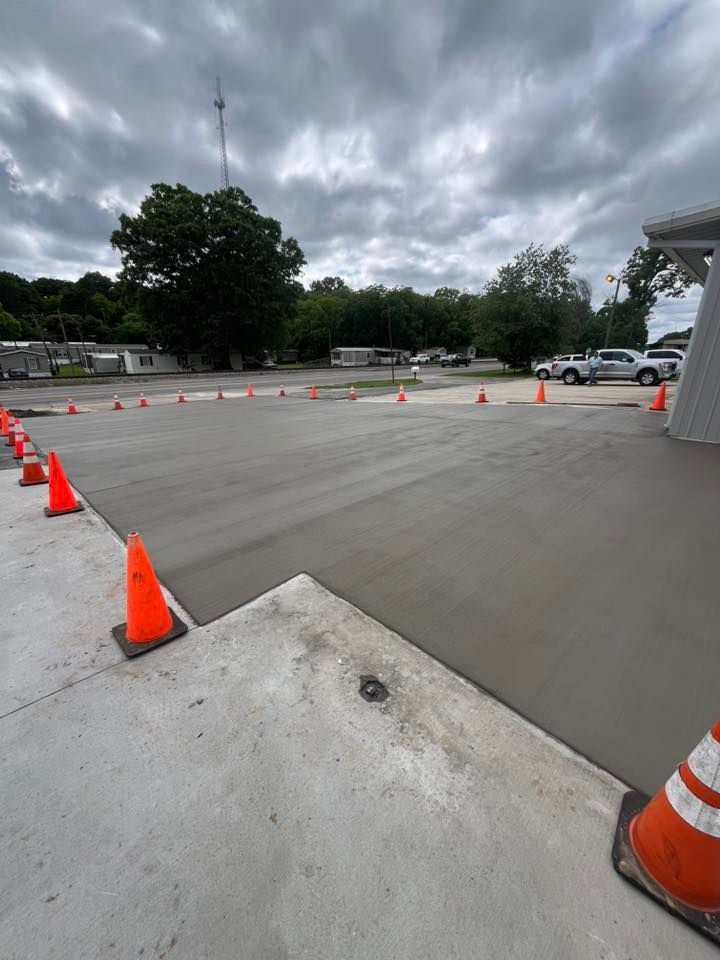
After repair or replacement, your concrete surface becomes level again, eliminating stumbling hazards and allowing water to drain as originally designed rather than ponding in settled depressions. New concrete takes seven days to reach handling strength and twenty-eight days to achieve full durability, during which protection from heavy loads and freeze exposure prevents damage to the developing surface. Replaced sections match surrounding concrete in color initially but weather to a consistent appearance over several months of UV exposure.
Repair services address concrete work only and do not include associated asphalt, landscaping, or utility modifications unless those items directly affect access or base preparation. Efficient demolition includes breaking concrete into sizes manageable for equipment loading and sorting reinforcement steel for separate disposal, keeping debris organized for faster site cleanup.
Questions Before Starting Your Project
Homeowners dealing with damaged concrete typically ask about repair versus replacement decisions, how quickly new concrete becomes usable, and what prevents the same problems from recurring after work completes.
What determines whether concrete can be repaired or needs replacement?
Surface damage limited to the top inch with stable underlying concrete accepts resurfacing, but cracks extending through the full thickness with ongoing movement require removal and replacement to achieve lasting results.
How are tree roots addressed during sidewalk repair?
Roots causing uplift are cut back beyond the repair area, though large roots supporting tree health may require rerouting the sidewalk or installing root barriers rather than cutting structural roots that could destabilize the tree.
When can vehicles drive on replaced concrete?
Light vehicle traffic is safe after seven days in warm weather, though full strength and durability develop over four weeks, making it best to avoid heavy trucks or equipment until concrete fully cures.
What causes concrete to crack shortly after installation?
Most early cracking results from rapid drying in hot weather, inadequate control joint spacing, or concrete placed over poorly compacted fill that settles and breaks the slab above.
How is the height matched when replacing sections?
Forming systems set new concrete elevation to match adjacent surfaces, though slight grinding or feathering at the joint transition may be needed once forms are removed and edges are exposed.
Heritage Excavation & Concrete LLC identifies why concrete failed before beginning repairs, addressing base problems and drainage issues that would otherwise cause new work to fail through the same mechanisms. Reach out at (803) 448-0542 to schedule an evaluation of your damaged concrete and discuss repair options specific to your property conditions in Rock Hill.