
Site Systems That Redirect Problem Water
Drainage & Erosion Control in Rock Hill for properties with standing water, foundation moisture, or soil washout
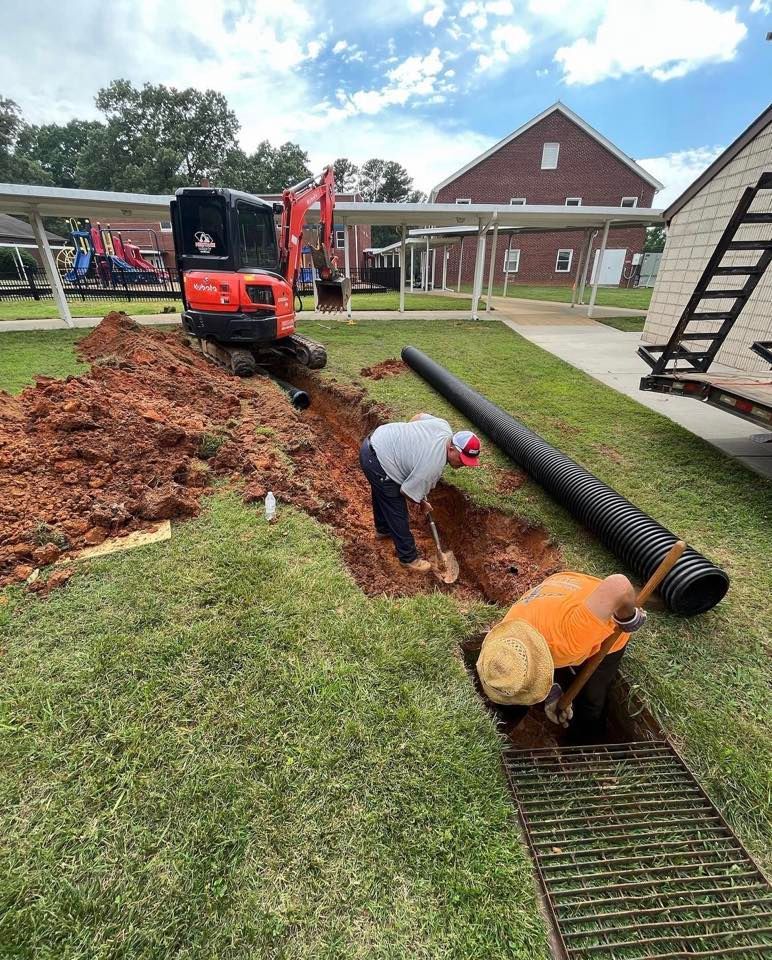
Standing water in your yard signals that surface drainage cannot handle the runoff volume or that subsurface flow concentrates in areas without adequate outlets. Heritage Excavation & Concrete LLC installs French drains, surface channels, and culverts throughout Rock Hill that intercept problem water before it reaches foundations, driveways, or low areas where it creates muddy unusable zones. The solution depends on whether water arrives as surface runoff during storms or emerges from groundwater seeping through soil layers, and identifying the source determines which drainage approach actually resolves the problem.
French drain installation involves excavating trenches to stable subsoil, lining them with filter fabric, placing perforated pipe surrounded by washed stone, and wrapping the stone in fabric before backfilling with soil. The fabric prevents fine soil particles from clogging the stone voids while allowing water to flow freely into the pipe, which slopes continuously to a discharge point at least ten feet from structures. Surface systems use graded swales or installed channels that intercept sheet flow and direct it toward storm drains or drainage easements.
Schedule a property evaluation to identify where water enters, where it needs to discharge, and which drainage approach fits your site conditions.
Why Drainage Systems Work for Specific Problems
Your drainage system must move water downhill using gravity alone, which means the outlet elevation dictates where collection points can be placed and how deep trenches must run to maintain continuous slope. Systems sized for Rock Hill's typical rainfall intensity handle approximately one inch per hour during peak storm events, with pipe diameter and stone volume calculated to convey that flow without surcharging. Erosion control adds outlet protection where concentrated flow would otherwise cut channels in soil, using riprap or concrete aprons that dissipate energy before water reenters natural drainage paths.
Once the system operates, you notice that areas previously too wet for foot traffic dry within hours after rain instead of remaining saturated for days. Foundation walls stay dry because water intercepts before reaching the structure, and driveways no longer show edge erosion where runoff previously cut underneath the pavement. The installed system requires minimal maintenance beyond checking outlet grates for debris accumulation during fall leaf drop.
Drainage work addresses water conveyance but does not include landscaping restoration, underground utility location, or downspout disconnection unless specified in the project scope. Clay soil common in Rock Hill requires larger stone envelopes around drain pipes compared to sandy soil, as fine clay particles migrate more readily and can clog drainage systems lacking adequate filtration.
What Property Owners Usually Ask
Owners facing drainage problems want to understand how water moves through their property, what system type resolves their specific issue, and how installations affect existing landscaping and lawn areas.
What causes water to pool in the same spot repeatedly?
Low areas collect runoff naturally, but persistent pooling often indicates compacted soil with reduced infiltration capacity or a subsurface hardpan layer that prevents water from percolating deeper into the soil profile.
How deep do French drains need to be installed?
Drain depth depends on the outlet elevation and the water source, typically running eighteen to thirty-six inches deep to intercept subsurface flow while maintaining enough slope to reach the discharge point.
When should erosion control be added to drainage systems?
Any outlet discharging concentrated flow needs erosion protection, as water velocity increases when channeled and will cut gullies in unprotected soil within a few storm cycles.
What maintenance do drainage systems require long-term?
Annual inspection of outlets and grates prevents debris blockages, and cleanout access points every fifty feet allow occasional flushing if sediment accumulates despite proper filtration fabric installation.
How is the discharge location determined for collected water?
Discharge must reach storm drains, drainage easements, or natural channels at lower elevation than collection points, with property line crossings requiring easements if flow exits onto adjacent parcels.
Heritage Excavation & Concrete LLC routes drainage systems to functional outlets rather than creating installations that move water from one problem area to another without actual site relief. Call (803) 448-0542 to discuss water problems affecting your Rock Hill property and review solution options during a site visit.