Surfaces That Drain Where Plans Intend
Grading & Site Preparation in Rock Hill for properties with standing water, construction pads, or erosion from uncontrolled runoff
Water pools near foundations because the lot slopes toward the house rather than away, or construction cannot begin because the building pad sits below finished floor elevation required by flood maps. Heritage Excavation & Concrete LLC reshapes terrain using dozers and motor graders that move soil in controlled lifts, establishes grades that direct rainfall toward storm systems or natural drainage paths, and compacts fill material so settlement does not create low spots after construction loads apply. Rough grading removes high points and fills depressions to approximate final contours, while finish grading refines surfaces to tolerances measured in tenths of a foot so paving and landscaping install on stable, sloped substrates.
Land leveling distributes soil across uneven terrain, cutting elevated areas and filling swales to create uniform slopes or flat pads depending on project requirements. Drainage correction reroutes runoff away from structures, driveways, and low-lying areas using surface contouring or subsurface systems, while erosion control solutions stabilize slopes with vegetation, riprap, or geotextiles that prevent soil migration during storms.
Arrange an on-site consultation to review current drainage patterns and proposed grade changes.
What Changes After Grading Establishes Proper Slope
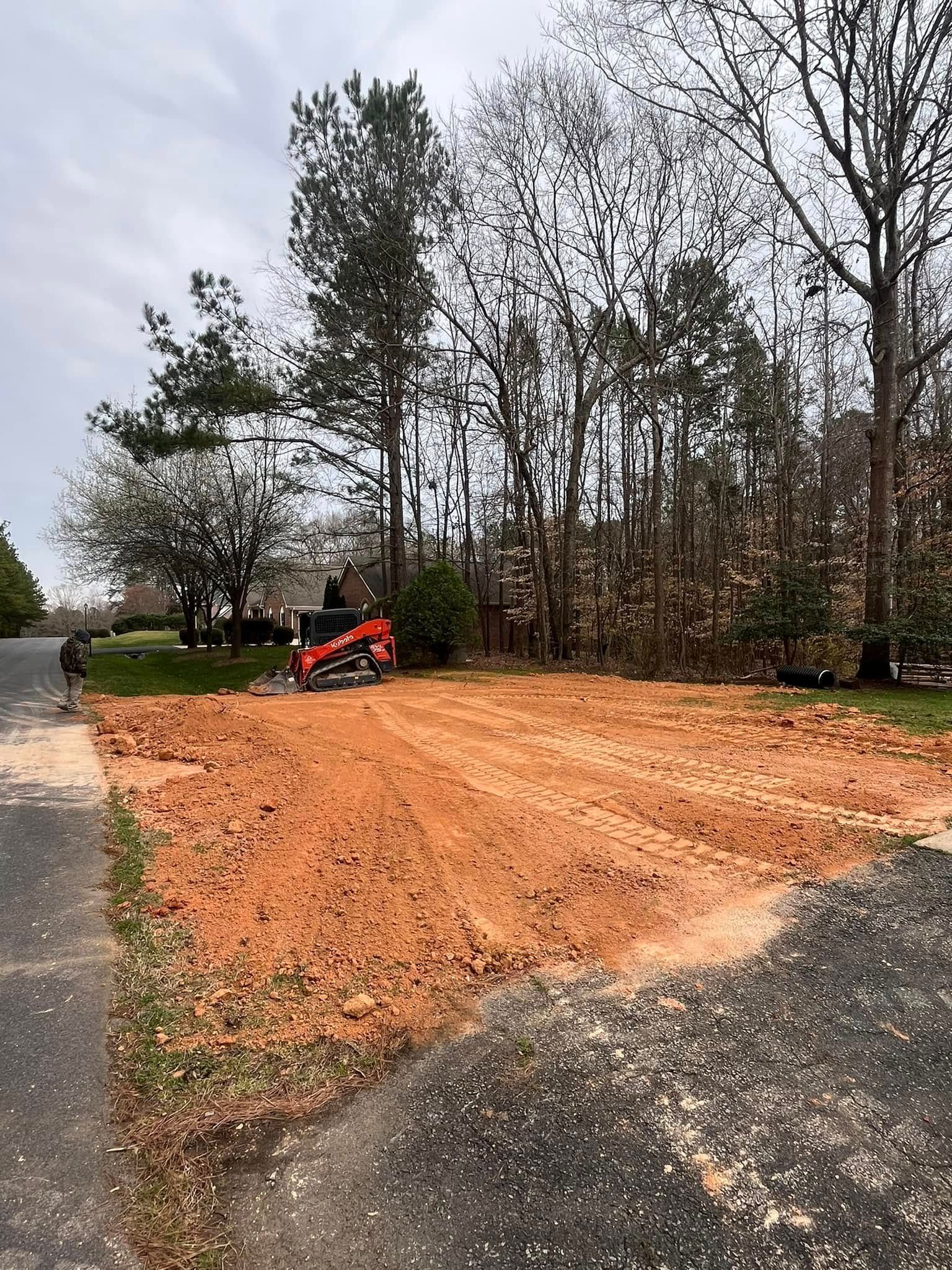
Pad preparation involves stripping organic topsoil, placing structural fill in compacted layers, and verifying elevation with survey instruments so the building footprint matches architectural plans. Construction site prep removes vegetation, grades access routes for material deliveries, and establishes temporary drainage controls that function until permanent systems install. South Carolina clay soils compact well when near optimum moisture content but become unstable if graded during saturated conditions, so scheduling aligns with weather forecasts that allow several dry days for compaction operations.
After grading completes, water flows visibly away from foundations during rainfall instead of ponding against walls, driveways slope toward street gutters without reverse grades that trap runoff, and building pads sit at elevations that meet finish floor requirements without excessive fill or cut depths. Landscapers install sod or plantings on stable slopes that resist erosion, concrete contractors pour slabs on compacted subgrades that minimize cracking from settlement, and property owners see uniform terrain rather than hummocky surfaces that indicate differential compaction.
Rough grading tolerances typically allow elevation variances of several inches across large areas, acceptable for establishing general contours but insufficient for final paving or concrete work. Finish grading tightens tolerances to fractions of an inch, verified using string lines, laser levels, or GPS-guided equipment that references digital terrain models, ensuring surfaces meet engineering specifications for drainage velocity and structural support.
Questions Before Starting Your Project
Grading questions frequently address how much soil movement a project requires, whether imported fill becomes necessary, and how grades affect long-term drainage performance.
How is proper drainage slope determined?
Grading plans specify minimum slopes, typically two percent away from structures for the first ten feet, with steeper grades used where space allows faster runoff and flatter grades acceptable for large open areas where erosion risk is low.
What causes graded areas to settle after construction?
Inadequate compaction leaves air voids between soil particles that collapse under structural loads or rainfall infiltration, with settlement severity depending on fill thickness, soil type, and compaction equipment used during placement.
When should grading happen relative to other site work in Rock Hill?
Grading typically follows demolition and excavation but precedes paving and landscaping, though phased projects may rough grade early and finish grade later to accommodate utility installation or foundation construction between grading operations.
How does erosion control integrate with grading work?
Temporary measures such as silt fencing, straw wattles, and seeded slopes install immediately after grading to stabilize soil before vegetation establishes, with permanent controls including swales, riprap channels, and retention basins constructed as final grading steps.
What equipment achieves finish grade tolerances?
Motor graders with laser control systems or GPS guidance maintain precise elevations across large areas, while smaller skid steers equipped with grading attachments handle tight spaces and fine adjustments that larger machines cannot access.
Heritage Excavation & Concrete LLC performs site surveys and drainage analysis before grading equipment mobilizes, identifying grade changes that address current problems without creating new runoff issues for adjacent properties. Contact us to discuss your property's elevation challenges and pad preparation requirements.