Walls Designed to Hold Soil Permanently
Retaining Wall Construction in Rock Hill for sloped properties experiencing erosion or requiring additional usable space
Sloped yards lose topsoil during heavy rain, create mowing hazards, and waste space that could function as patios or planting beds. Retaining walls built by Heritage Excavation & Concrete LLC hold back soil on Rock Hill properties while creating level terraces for landscaping or outdoor living areas. The wall functions as a permanent structure resisting lateral soil pressure, hydrostatic pressure from groundwater, and surcharge loads from driveways or structures above, which means the design must account for forces that increase with wall height and soil type.
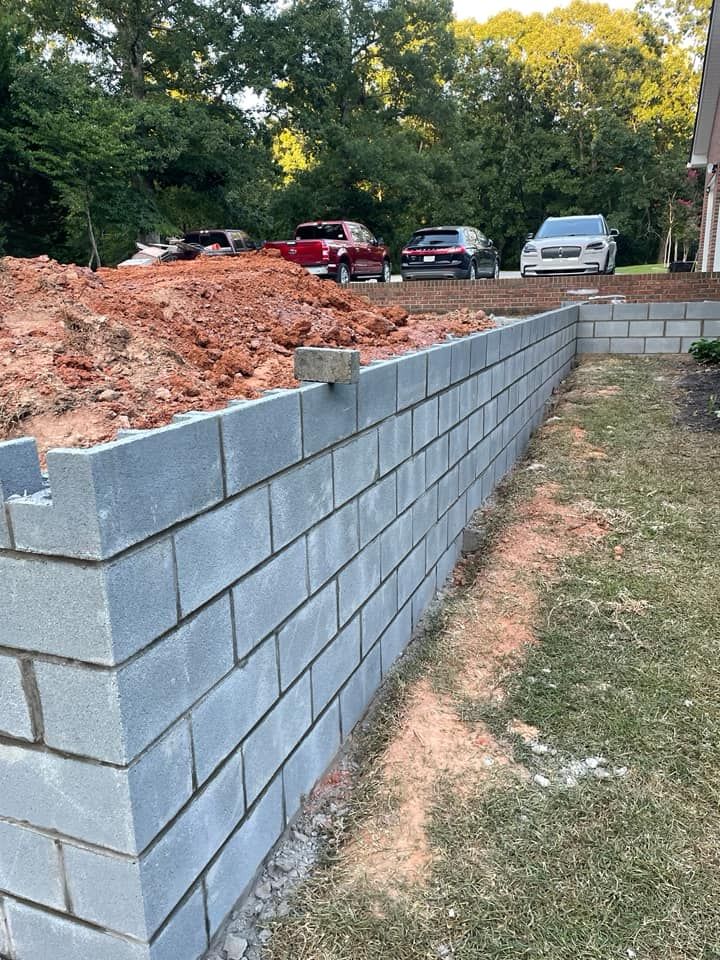
Wall construction begins with a below-grade footing poured on undisturbed soil, sized to resist overturning forces calculated from the retained soil height. Vertical rebar extends from the footing into concrete block cores or formed concrete walls, creating a continuous reinforced structure rather than stacked units relying on friction alone. Drainage systems behind the wall collect groundwater and route it to discharge points, preventing the hydrostatic pressure buildup that causes walls to lean or fail during saturated conditions.
Request a site evaluation to determine wall height requirements and discuss finish options for your landscape project.
What Changes After Wall Installation Completes
The retained soil remains stable during storms that previously washed channels down your slope, and you gain flat areas suitable for planting beds, patios, or lawn where only steep unusable ground existed before. Properly designed walls include weep holes or drainage pipe that release water pressure rather than allowing it to accumulate, which is why you see occasional damp spots at the base after heavy rain rather than continuous seepage that indicates drainage failure. Backfill behind the wall uses crushed stone rather than clay, creating a free-draining zone that sheds water before it saturates the retained soil.
Walls exceeding four feet in height require engineering calculations that account for soil bearing capacity, surcharge loads, and seismic considerations, even in residential applications. The wall face can remain exposed concrete, receive stucco or stone veneer, or use decorative block that provides finished appearance without additional facing work. Cap blocks on top of the wall shed rain away from the joints and provide a finished edge for landscaping.
Answers to Frequent Service Questions
Property owners considering retaining walls need to understand structural requirements, drainage integration, and how wall height affects both cost and engineering complexity for their specific site conditions.
What wall height triggers engineering requirements?
Walls exceeding four feet typically require stamped engineering drawings for permit approval in Rock Hill, though shorter walls near property lines or supporting surcharge loads may also require engineering review.
How does drainage behind the wall prevent failure?
Perforated pipe at the footing level collects groundwater and routes it to daylight or storm drains, keeping hydrostatic pressure low enough that the wall only resists soil weight rather than water-saturated soil that weighs nearly twice as much.
When should retaining walls be built relative to other landscaping?
Walls are typically installed before final grading and planting, as the excavation and backfill process would damage existing landscape materials and the terraced areas need time to settle before planting.
What spacing do terraced walls require on steep slopes?
Multiple shorter walls separated by terraces are often more cost-effective than a single tall wall, with terrace width generally matching or exceeding the wall height to provide stable working areas between levels.
How long before soil behind the wall stabilizes fully?
Backfilled soil continues settling for several months after installation, so final grading and landscape planting should wait until settlement stops to avoid creating low spots that collect water.
Heritage Excavation & Concrete LLC designs retaining walls sized for actual site loads and soil conditions rather than using generic details that fail when conditions vary from assumptions. Schedule a property visit to review wall placement options and drainage integration with your existing site.