Structures Removed Without Collateral Damage
Demolition Services in Rock Hill for buildings beyond practical repair, property redevelopment plans, or structures with foundation failure
A house with fire damage, a garage leaning off its footer, or a commercial building slated for replacement occupies space that new construction cannot proceed around. The existing structure must come down in a controlled sequence that protects adjacent property, manages dust and noise, and separates materials for disposal or recycling. Heritage Excavation & Concrete LLC executes residential and commercial demolition using equipment matched to building size, demolishes interiors without compromising exterior walls when partial removal serves the project, and clears debris so the site returns to grade level ready for the next phase.
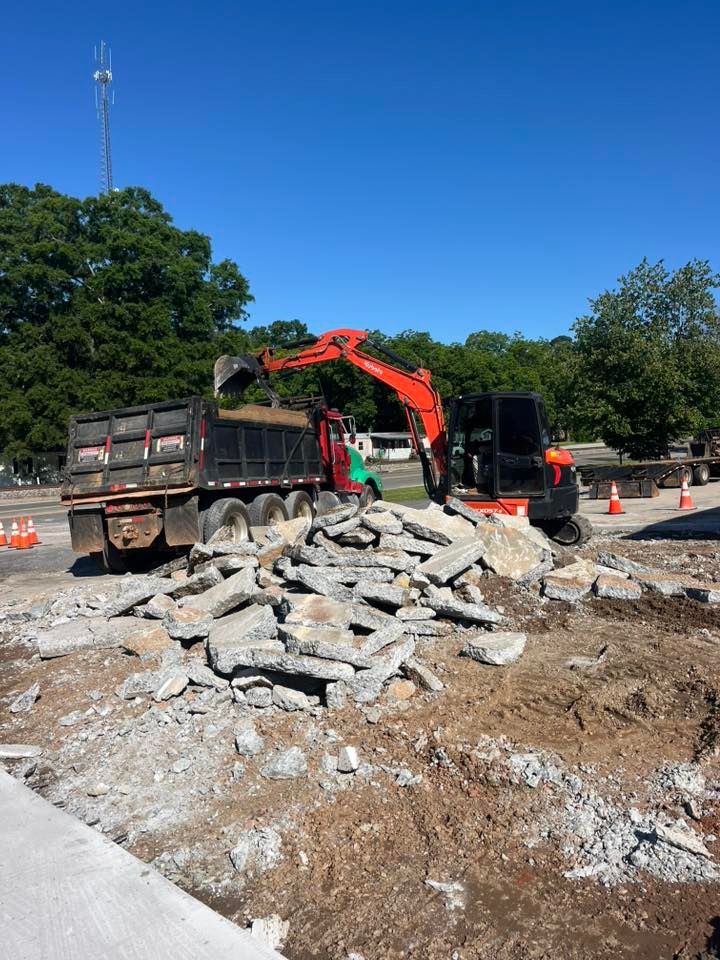
House demolition involves disconnecting utilities at the meter, removing hazardous materials such as asbestos if present, and mechanically dismantling the structure from roof to foundation. Concrete breaking uses hydraulic hammers to fracture slabs and footers into transportable pieces, while debris disposal segregates wood, metal, concrete, and shingles according to landfill and recycling facility requirements in South Carolina.
Arrange a site visit to assess utility disconnection needs and debris haul distance.
How Demolition Addresses Structural Liability
Safety-focused project execution means establishing fall zones, restricting access during active demolition, and monitoring weather since high winds destabilize partially demolished walls. Interior demolition removes walls, fixtures, and flooring without affecting the building envelope, often required when commercial spaces reconfigure layout but retain the shell. Selective removal preserves elements the owner plans to reuse, though structural connections must be evaluated before cutting members that share load paths with remaining components.
After demolition concludes, the lot shows clean grade without protruding rebar, foundation remnants backfilled or removed per plan requirements, and compacted soil where structures previously stood. Neighbors no longer see an unstable building, surveyors can establish new building corners without obstructions, and grading equipment operates across the entire parcel without dodging debris piles that create elevation inconsistencies.
Permit requirements vary depending on whether demolition includes foundation removal or leaves below-grade elements in place, and some municipalities require asbestos surveys even for buildings constructed after regulated materials were phased out. Garage and shed removal generally proceeds faster than house demolition due to smaller footprints and simpler utility connections, though accessory structures often sit closer to property lines where equipment clearance becomes the limiting factor.
Common Questions About This Service
Demolition questions typically address permitting timelines, how debris gets quantified for disposal cost estimates, and what remains on-site after the work finishes.
What permits are required before demolition begins in Rock Hill?
Most jurisdictions require a demolition permit that confirms utility disconnection, asbestos survey completion if applicable, and erosion control measures for exposed soil, with approval timelines ranging from days to weeks depending on building size and zoning classification.
How long does a typical house demolition take?
Single-family homes are often demolished and debris removed within two to four days, though projects extend when foundations must be broken out completely or when material separation for recycling adds sorting time on-site.
What happens to materials after demolition?
Concrete gets hauled to crushing facilities for aggregate recycling, metals are separated and sold as scrap, wood debris goes to landfills or biomass facilities, and shingles are disposed of according to local waste regulations.
How is dust controlled during concrete breaking?
Water suppression reduces airborne particles during hydraulic hammer operation, and work schedules avoid prolonged hammering during early morning or late evening hours when neighbors are most affected by noise and vibration.
Can part of a building be demolished while leaving other sections intact?
Interior demolition removes non-structural walls, ceilings, and floors without compromising exterior walls or roofing, though load-bearing elements require temporary shoring if adjacent areas remain occupied during the work.
Heritage Excavation & Concrete LLC manages debris logistics and utility coordination so demolition timelines remain predictable even when disposal facilities change receiving requirements. Contact the office to discuss permit assistance and project scheduling for your specific structure type.