Sites Prepared for Whatever Comes Next
Land Clearing Services in Rock Hill for properties with overgrown vegetation, construction timelines, or site access limitations
Dense brush and mature trees occupy the exact footprint where construction equipment needs to operate or where a new landscape plan requires clean ground. Heritage Excavation & Concrete LLC removes vegetation, grinds stumps below grade, and hauls debris off-site so lot preparation stays on schedule in Rock Hill. Equipment reaches areas that manual clearing cannot address efficiently, and the timeline compresses from weeks of hand labor to days of coordinated machine work.
Tree and brush removal involves cutting vegetation at ground level, extracting root systems that interfere with grading or foundation work, and segregating material for disposal or chipping. Stump removal grinds remaining wood several inches below the surface so soil can be leveled without obstructions that damage blades or create settlement pockets later. Debris hauling clears the site completely rather than leaving piles that delay the next phase of work.
Request an on-site assessment to review vegetation density and site access requirements.
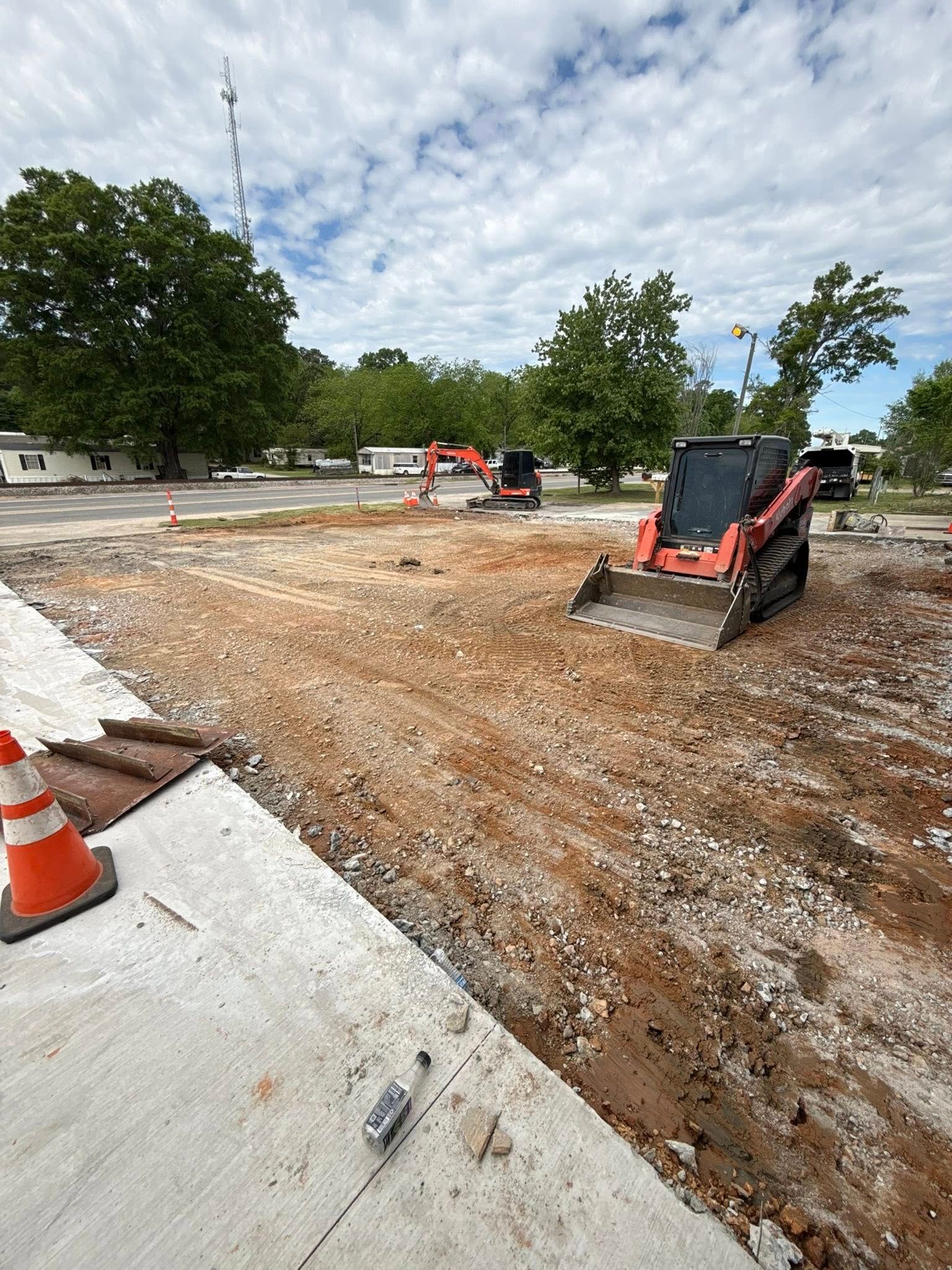
What Proper Clearing Leaves Behind
Lot preparation requires removing not just visible growth but root masses that extend beyond the tree canopy, particularly for species common in South Carolina such as pine and hardwood that send lateral roots across property lines. Equipment operators identify underground utilities before digging, mark grades for drainage flow, and separate topsoil from subsoil when future landscaping will reuse existing material.
Once clearing finishes, the site surface shows uniform grade without stumps breaking the plane, no slash piles obstructing access routes, and clean boundaries where vegetation transitions to cleared area. Construction crews move equipment without dodging obstacles, grading machines achieve consistent depth cuts, and surveyors establish accurate elevations because the ground plane reflects actual terrain rather than temporary debris.
Residential and commercial clearing differ primarily in scale and permit coordination, but both require managing debris volume so hauling capacity matches removal speed. Projects that clear incrementally rather than all at once allow phased construction starts, though weather delays compound when partial clearing leaves exposed soil vulnerable to erosion between work periods.
What Property Owners Usually Ask
Land clearing questions often focus on timing, disposal logistics, and how the site will drain once vegetation no longer intercepts rainfall.
What happens to stumps after trees are cut?
Stumps are ground below the soil surface using specialized equipment that chews wood into chips, leaving a depression that gets backfilled with soil so the grade remains consistent across the cleared area.
How does clearing affect drainage on sloped lots?
Removing trees and brush eliminates root systems that previously absorbed runoff, so grading must redirect water toward designed drainage paths rather than allowing sheet flow to erode exposed soil.
When should clearing happen relative to construction schedules?
Clearing typically occurs immediately before site work begins so vegetation does not regrow and debris does not accumulate moisture that complicates removal, though winter clearing in Rock Hill avoids nesting season restrictions for certain wildlife.
What size equipment operates on residential lots without damaging adjacent property?
Compact excavators and skid steers access tight spaces while larger dozers handle open acreage, with equipment selection based on gate width, overhead clearance, and soil bearing capacity during wet conditions common in South Carolina.
How is debris disposed of after clearing?
Material gets hauled to permitted facilities that process wood waste, with some projects chipping brush on-site for mulch use and others requiring complete removal when homeowner associations prohibit temporary storage of organic material.
Heritage Excavation & Concrete LLC coordinates clearing with grading and excavation phases so site preparation progresses without equipment repositioning delays. Schedule a consultation to review site access and debris volume estimates before work begins.