Ground Opened to Exact Depth and Width
Excavation Services in Rock Hill for foundation pours, utility installations, and drainage correction projects
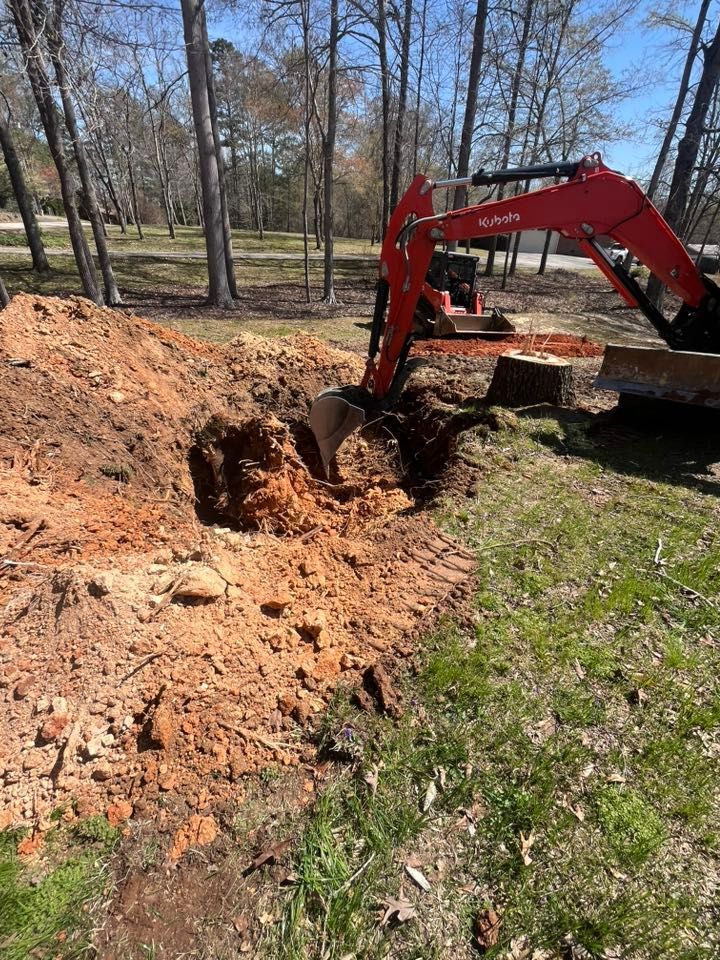
Foundation excavation removes soil to depths specified by structural plans, creating level bearing surfaces where concrete will be poured and footers will transfer building loads into stable ground. Utility line excavation trenches pathways for water, sewer, electric, and gas connections without disturbing adjacent systems or violating clearance requirements between parallel runs. Heritage Excavation & Concrete LLC operates equipment that digs trenches ranging from narrow utility slots to wide foundation pits, adjusts depth incrementally to match grade changes across sloped lots, and stockpiles excavated material when backfill will reuse on-site soil after lines are installed.
Precision grading and digging involve setting laser levels or grade stakes that guide excavation depth, checking measurements repeatedly as the cut progresses, and avoiding over-excavation that requires imported fill to restore design elevation. Drainage excavation slopes trenches to achieve gravity flow without relying on pumps, while site preparation excavation strips topsoil and organic material that compresses unevenly under structural loads.
Schedule a property evaluation to identify existing utilities and soil conditions before trenching begins.
Why Excavation Depth Determines Foundation Performance
Trenching services cut narrow channels for conduit and pipe, with width determined by bedding material requirements and whether the trench must accommodate workers for manual connections. South Carolina clay soils hold trench walls temporarily but slump after rainfall saturates the cut, so projects schedule backfill promptly after utility installation rather than leaving trenches open through weather events. Depth accuracy matters because utilities crossing paths must maintain vertical separation, and foundation footers must reach undisturbed soil capable of supporting design loads without settlement.
Once excavation finishes, the foundation contractor sees uniform bearing surface free of loose soil pockets, trenches at consistent grade confirmed by flow testing or laser verification, and stockpiled backfill positioned for efficient return after inspections pass. Concrete forms set level because the excavation provided accurate elevation, drainage lines slope without low spots that trap water, and utility connections meet code depth requirements that prevent frost heave or traffic damage.
Site preparation excavation differs from precision foundation digging primarily in tolerance, with rough cuts allowing several inches of variance while footer trenches require accuracy within fractions of an inch. Erosion control solutions include silt fencing along downslope trench edges and temporary berms that redirect runoff away from open cuts, preventing sediment migration into storm systems or adjacent properties during construction phases.
Answers to Frequent Service Questions
Excavation inquiries often center on how existing utilities get located, what soil conditions affect digging speed, and how weather delays impact project timelines.
How are underground utilities located before excavation starts?
Utility locating services mark electric, gas, water, sewer, and communication lines using electromagnetic detection and ground-penetrating radar, with marks typically valid for two weeks before re-verification is required if work delays push start dates.
What soil types in Rock Hill affect excavation difficulty?
Clay soils excavate cleanly when dry but become sticky and heavy when saturated, while sandy soils trench easily but require shoring or sloping to prevent cave-ins, with rock layers occasionally encountered that necessitate hydraulic hammers or blasting permits.
How deep can trenches be dug without shoring?
Occupational safety regulations require trench shoring, sloping, or benching for excavations deeper than five feet, with specific requirements based on soil type and whether workers enter the trench during utility installation.
What happens to excavated soil?
Material gets stockpiled on-site for backfill if soil quality and project specifications allow reuse, or hauled off-site when imported engineered fill provides better compaction characteristics or when excess volume cannot be redistributed on the property.
How does drainage excavation differ from foundation excavation?
Drainage trenches slope consistently toward discharge points and often include gravel bedding around perforated pipe, while foundation excavation prioritizes level bearing surfaces and precise depth control to match structural drawings.
Heritage Excavation & Concrete LLC coordinates utility locates and soil testing before equipment mobilizes, reducing delays from unexpected subsurface conditions. Request a detailed estimate based on site access and excavation volume for your specific project type.